



Popular Reviews



There's an easy way to dismiss Cat Chess before playing it: "It's chess. But with cats. That's it. That's the whole pitch."
This dismissal is factually correct. It's also, I want to argue, wrong.
The reason it's wrong is that chess as a game has been available in essentially every conceivable form for the last thirty years — hundreds of chess apps, thousands of chess implementations, the massive digital chess ecosystem centered on chess.com and Lichess, plus the countless AAA and indie games that use chess mechanics as building blocks (Auto Chess, Chess 2, Really Bad Chess, Pawnbarian, Shotgun King, and dozens more). If someone were going to make "chess but with cats," it should have happened years ago. It should have been done to death. There should be five competing cat chess games on Steam already.
But there aren't. Cat Chess, released July 14, 2026 by Capricia Labs, is genuinely the first serious commercial cat-themed chess game on Steam. And this is a small but real observation about how gaps in the game market work: even after decades of chess variants and cute cat games, the specific intersection of "chess" and "cats fighting each other on the board" apparently hadn't been executed at commercial quality until now. Capricia noticed the gap and filled it.
At -15% and $5.94, Cat Chess is one of the cheapest premium games on the current sale. Whether it deserves your attention comes down to specific questions about what you actually want from chess as a video game.
What Cat Chess Actually Is
Mechanically, Cat Chess is standard chess. Standard board size (8x8). Standard piece movement rules. Standard win conditions (checkmate, stalemate, resignation). Standard starting position. There is nothing mechanically novel here — no new pieces, no altered movement, no board terrain effects.
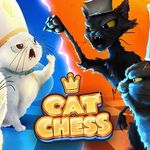
What's different is presentation. Every piece is a cat character, and each cat has a specific visual personality that maps to its role. The King is a regal, crown-wearing cat. The Queen is expressive and dynamic. Rooks are stout and defensive-looking. Bishops are lean and mysterious. Knights are — obviously — jumpy. Pawns are small and cute.
There are two visually distinct team sets: Stray Cats (rougher, more feral aesthetic) and House Cats (cleaner, more domestic aesthetic). You can play as either team against the other. DLC packs offer additional cat variants for cosmetic customization.
When pieces capture each other, there are animated sequences — a small paw-swatting fight between two cats before one walks off victorious. When your king is in check, your king cat makes a distressed animation. When a piece moves, the cat walks (or slides, or hops in the case of the knight) rather than teleporting. Every mechanical action has a small feline personality attached to it.
The game supports single-player against adjustable AI difficulty and PvP multiplayer against other players online.
The AI, Because This Is Chess and AI Matters
Chess AI has been essentially a solved problem for two decades. Stockfish, Leela Chess Zero, and other open-source engines can defeat any human player. Making a chess AI that plays perfectly is trivial.
What's genuinely hard is making a chess AI that plays appropriately for a specific human opponent. Chess AI that's too strong feels punishing. Chess AI that's too weak feels boring. Chess AI that's inconsistent feels unfair. Getting the calibration right at various difficulty levels is a real design challenge.
Cat Chess offers multiple difficulty tiers up to Elo 2000+, which is genuinely competitive for most human players. The AI at lower difficulty tiers plays more casual chess with occasional intentional blunders that create winnable scenarios for beginners. Higher difficulty tiers play tighter chess that requires real understanding to overcome.
Community feedback suggests the AI has some quirks. Some players have reported specific edge cases where the AI king makes wild movements that put itself in check, or where stalemate conditions trigger in scenarios where checkmate should have been forced. These are being patched.
The game also lacks some standard chess features that competitive players expect: castling has been reported as sometimes buggy, en passant is absent from some builds, and there's no formal draw offer mechanic. For casual chess, none of this matters. For serious chess, these gaps are meaningful.
Even after decades of chess variants and cute cat games, the specific intersection of "chess" and "cats fighting each other" apparently hadn't been executed at commercial quality until now.
The Case Against Cat Chess
I want to steelman the argument for not buying this game, because it's genuinely defensible.
If you're a serious chess player, you should be on chess.com or Lichess. Both are free. Both have infinite opposition. Both have serious analysis tools, coach-quality tutorials, and competitive rating systems. Cat Chess doesn't offer anything the free chess platforms don't offer better, from a pure chess perspective.
If you want a chess variant that changes the mechanics of chess, Cat Chess doesn't do that. It's cosmetic on top of standard chess. Play Shotgun King instead if you want mechanically inventive chess variants.
If you specifically dislike cute aesthetics, Cat Chess is deliberately aggressive in its cuteness. There's no "serious mode" that strips out the cat personalities.
If you have concerns about chess variants monetized with DLC cat packs, Cat Chess does have optional supporter DLC that unlocks additional cat cosmetics. This is not aggressive monetization, but it exists.
The Case For Cat Chess
Now let me steelman the other side.
The specific pleasure of chess with strong personality is genuine and hard to replicate. Chess.com is a serious competitive platform. Cat Chess is a game about cats being cats while playing chess. These are different experiences, and the second one has value.
Chess as an educational entry point works better with warmth than with intimidation. If you're introducing chess to a child, a partner who has never played, or anyone with mild chess anxiety, the cute presentation reduces intimidation. This game is a genuinely good chess-teaching tool for beginners.
Local multiplayer with a partner works well when both players are casually engaged. The cats give you something to comment on and laugh about beyond just the tactical outcomes.
The price is very low. $5.94 for a competent chess implementation with strong art direction is fair.
If you enjoy the aesthetic layer specifically — if you find cats swatting each other over pawn positions genuinely charming — no chess.com feature will provide that.
Compared to Other Chess Variants on Steam
Steam has a small but growing library of chess-inspired games. Cat Chess sits in a specific corner of it.
Shotgun King (Punkcake Delicieux, 2022): takes chess as a starting point and radically transforms it — you play a lone king with a shotgun against an enemy army. Genuinely inventive. If you want chess mechanically remixed, this is it.
Pawnbarian (j4nw, 2021): roguelike deck-builder using chess piece movement rules. Innovative and well-loved by its niche.
Really Bad Chess (Zach Gage, 2018): chess where both players get random piece assignments. Interesting variant that plays with piece values.
Chess Ultra (Ripstone, 2017): the "premium" chess implementation on Steam with photorealistic environments and tournament features. This is what you buy if you want traditional chess with production values.
Cat Chess doesn't compete with any of these directly. It's not mechanically inventive like Shotgun King. It's not roguelike-adjacent like Pawnbarian. It's not a serious tournament simulator like Chess Ultra. It's specifically "chess with cute cats and character animations," and no other Steam game currently does that.
Where the Game Falls Short
Content depth is modest. Standard chess with visual variations. If you want extensive tutorials, opening trainers, endgame practice modes, or analysis tools, this isn't it.
Multiplayer is currently limited. You can play PvP but the multiplayer infrastructure is more casual than competitive. Rated ladders and elaborate matchmaking aren't the focus.
Some chess features are buggy or absent. Castling issues, en passant absence in some builds, no draw offer button. Capricia is patching but these matter.
Pattern recognition is harder with the cat pieces. Serious chess players rely on quickly identifying piece types across the board. When all pieces are cats and only subtle differences distinguish them, pattern recognition slows down. Some players have specifically requested a toggle to show traditional chess piece silhouettes overlaid; this doesn't yet exist.
Who Should Buy at Under Six Dollars
Recommend if: you want a cute, casual chess implementation with real charm. Recommend if: you're introducing chess to a child or beginner. Recommend if: you like the specific aesthetic of feline character work. Recommend if: you want a chess game to play with a partner casually rather than competitively.
Don't recommend if: you're a serious chess player using it for practice. Don't recommend if: you specifically dislike aggressively cute aesthetics. Don't recommend if: you want mechanically inventive chess variants.
At $5.94, this is essentially an impulse-buy price. If the pitch of "chess with cats" makes you smile rather than roll your eyes, buy it. It's not going to be your favorite game of 2026. But it's a specific pleasure that no other game currently offers, and Capricia Labs deserves credit for finding the gap in the market and filling it competently. Chess has been played for over a thousand years. Adding cats to it is not going to change the game meaningfully. But it does add a small amount of joy to specific hours of playing chess casually. That small amount of joy is what you're buying, and at this price it's fair. Buy the cats. Let them fight over the board. Enjoy the animations. Sometimes that's what a game needs to be.
There's a broader observation worth naming about how gaps in the game market persist even after decades of a genre's development. Chess is one of the most-implemented games in software history. Thousands of chess programs exist. Yet the specific niche of "cute animated chess with strong character work" was empty until Capricia filled it in 2026. This tells us something small but real about how creative work develops. Even in areas that seem exhausted, there are always specific untried combinations. Even in mature markets, there are always specific gaps waiting for someone to notice them and act. Capricia Labs noticed the gap between "serious chess platforms like chess.com" and "cute casual games for beginners," and they built the specific bridge that was missing. That kind of creative alertness — noticing what's absent from a mature market rather than trying to compete in what's already crowded — is a skill worth developing regardless of whether you're a game developer or in any other creative field. Cat Chess is a small game, but the design lesson of its existence is a real one. The game world will keep producing surprises like this — small specific ideas that nobody bothered to execute until someone finally did — for as long as human creativity keeps finding gaps in the accumulated catalog of what already exists.